
Views: 0 Author: Site Editor Publish Time: 2026-01-13 Origin: Site


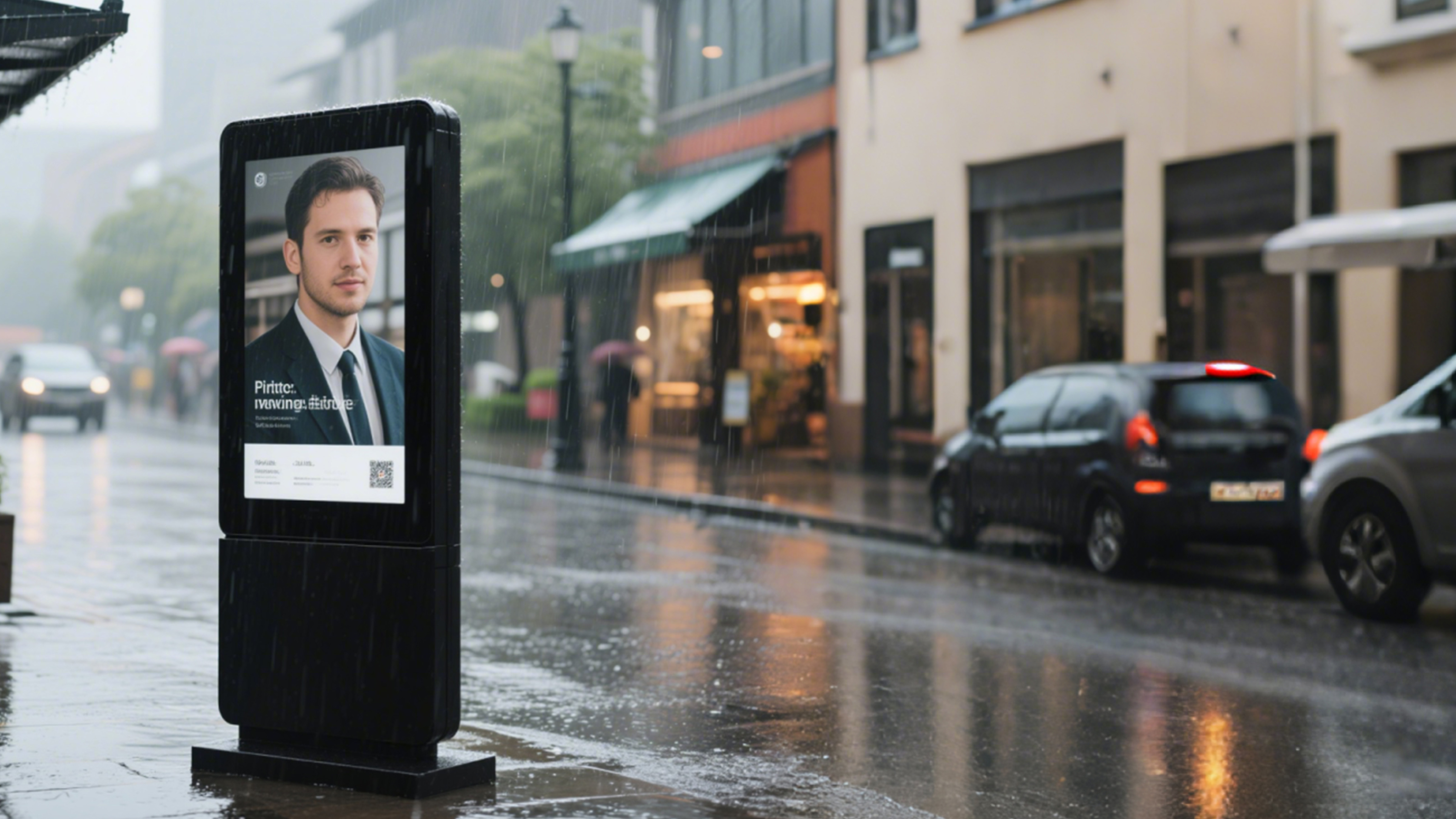
Outside a luxury shopping mall in Dubai, an advertising display is experiencing the of an artificial fountain; on the rainy streets of London, another device operates continuously in humid air—both rely on an invisible waterproofing system. Waterproofing technology is the cornerstone of survival for outdoor advertising displays, determining not only whether the equipment can survive in rainy, humid, or even wash-down environments, but also directly impacting its long-term stability and operational costs.
This article will systematically analyze the implementation methods of waterproofing for outdoor advertising displays and, combined with the five most concerned questions, reveal the full-chain waterproofing logic from design and verification to maintenance.

Core Framework of Waterproof Design: The IP Protection Rating System
The waterproof capability of outdoor advertising displays is first quantified through the International Protection Rating system. The IP code consists of two digits: the first indicates the level of protection against solid foreign objects, and the second indicates the waterproof rating. This standardized system provides clear guidance for design and selection.
It is worth reflecting that many users see labels like "IP65" or "IP67" but do not understand the actual test scenarios behind these numbers. IP65 means the device can withstand low-pressure water jets from any direction, simulating heavy rain or cleaning wash-downs; IP67 further requires the device to be unaffected after immersion in 1 meter of water for 30 minutes. This standardized testing method ensures comparability between products from different manufacturers.
In practical applications, the choice of protection level should be based on the deployment environment. For example, for deployment in coastal areas prone to typhoons and heavy rain or commercial areas requiring regular high-pressure washing, IP67 is a safer choice. For ordinary urban streets, IP65 is usually sufficient to handle natural precipitation.

Specific Technical Pathways for Waterproof Implementation
Achieving waterproofing for advertising displays is a systematic engineering project involving multiple aspects of materials science, structural design, and manufacturing processes.
Structural sealing design is the foundation of waterproofing. Modern outdoor advertising displays use integral molding bodies paired with specialized sealing strips to form physical barriers at the seams between the panel and the housing, and between parts of the housing. High-quality sealing materials need to combine elasticity and durability, capable of withstanding expansion and contraction caused by temperature changes over the device's lifecycle without failing.
Special protection for key areas is often critical to success. The display screen, as the largest opening, uses high-viscosity waterproof foam tape for full-perimeter sealing; interface areas use professional waterproof connectors with rubber sealing rings, such as M-type threaded connectors or aviation plugs; the conflict between heat dissipation needs and waterproofing is resolved through labyrinth-style cooling channels or waterproof breathable membranes, with the latter allowing air circulation while blocking liquid water molecules.
Internal waterproofing measures are equally important. Even with perfect external sealing, temperature differences can still cause internal condensation. Therefore, many high-end models place desiccants inside or apply moisture-proof coatings to circuit boards. Some products also use temperature control systems to maintain the internal temperature above the dew point, fundamentally preventing condensation.
In-Depth Technical Analysis of the Five Core Questions
Question 1: The Practical Meaning and Selection of IP Ratings
IP ratings are not marketing terms but certification results from strict laboratory testing. When a device is labeled IP65, it means it has passed a water spray test using a 6.3mm diameter nozzle, from a distance of 2.5-3 meters, with a water flow rate of 12.5 L/min. Manufacturers must pass third-party certification body testing to use this label. For users, when selecting, priority should be given to products with formal IP certification reports, rather than relying solely on promotional materials.
Question 2: Real Waterproof Performance in Daily Environments
Rain, washing, and humid environments each pose different challenges. For vertically falling rain, as long as the housing has a certain slope, an IP54 rating is generally sufficient. For spray with some pressure (such as cleaning wash-downs or sideways rain during storms), IP65 or higher is required. The key is understanding the holistic principle of waterproof design for outdoor advertising displays—it's not just about preventing direct water entry, but also considering that water may flow along surfaces, accumulate, and find weak points to seep through.
Question 3: Protection Strategies for Long-Term Humid Environments
Coastal or high-humidity areas present challenges from two aspects: salt spray corrosion and long-term humid air infiltration. Addressing such environments requires multiple protection strategies: using corrosion-resistant materials externally (such as stainless steel or specially treated aluminum alloy), employing anti-aging sealing materials at seams, and adding active moisture-proof measures internally. Some products designed for extreme environments may even use nitrogen filling or vacuum sealing technologies to create a dry internal environment.
Question 4: Specific Waterproof Solutions for Openings
Openings such as cooling vents and interfaces are critical nodes in waterproof design. Modern outdoor advertising displays commonly use labyrinth-style cooling structures, which design complex airflow paths so water droplets cannot enter in a straight line; waterproof breathable valves use ePTFE (expanded polytetrafluoroethylene) membrane, whose pore size is much smaller than water droplets but larger than air molecules, achieving a "breathing" function. For cable entries, compression-type sealing glands increase sealing pressure as the nut is tightened, ensuring long-term reliability.
Question 5: Maintenance and Aging Management of Waterproof Performance
Waterproof performance degrades over time, but scientific maintenance can significantly extend its effective lifespan. Maintenance should focus on three aspects: inspecting seal material aging, ensuring drainage channels are clear, and repairing accidental damage. It is particularly noteworthy that many waterproof failure cases stem from unprofessional installation or modification, such as using mismatched cable connectors or damaging the original sealing structure. Therefore, establishing a standardized operational process from installation to maintenance is crucial.

Technological Development Trends and User Decision-Making Advice
Waterproof technology is developing toward intelligent monitoring. Some cutting-edge products already integrate humidity sensors that can monitor the internal environment in real time and issue alerts when anomalies occur; research on self-healing sealing materials is also underway, which can automatically repair minor damage.
For users, selecting a waterproof solution should follow the "moderate redundancy" principle—that is, choosing a protection level slightly higher than the current environmental requirements within the budget, leaving a safety margin for climate change and equipment aging. At the same time, a "full lifecycle waterproof management" awareness should be established, with each link—from certification verification during procurement, to professional installation, to regular inspection and maintenance—being equally important.
Finally, it must be emphasized that no waterproof design is absolutely permanent. Ultraviolet radiation, temperature cycling, mechanical stress, and chemical pollution will gradually degrade the sealing performance of materials. Therefore, reasonable maintenance cycles (typically recommended at least once a year for professional inspection) and timely repairs are more important than merely pursuing the highest initial rating.
Conclusion: The Essence of Waterproof Design
The realization of waterproofing for outdoor advertising displays, on the surface, is a technical issue involving a series of material choices and structural designs. In essence, it is a comprehensive reflection of a deep understanding of environmental challenges and full lifecycle risk management. Excellent waterproof design does not pursue the highest score in laboratory tests but seeks the optimal balance between reliability, cost, and maintainability.
When we see an outdoor advertising display showing clearly in a rainstorm, behind it lies the crystallization of wisdom from materials science, mechanical engineering, and maintenance management. Understanding this waterproof logic hidden inside the equipment can not only help us make wiser procurement decisions but also build a deeper understanding of outdoor digital media as a modern urban element—it is not just a carrier of information but also a microcosm of human technology adapting to the natural environment.


