
Views: 0 Author: Site Editor Publish Time: 2026-01-13 Origin: Site


Whether standing tall in the scorching deserts of the Middle East or exposed on the windy streets of Northern Europe, outdoor advertising displays require a sophisticated "climate armor"—a temperature control system—to ensure their delicate internal electronic components operate stably within the harsh temperature range of -40°C to +55°C.
This system intelligently monitors and regulates temperature to combat extreme weather conditions. The selection and application of such a system directly impact the device's reliability, lifespan, and energy consumption.
The Severe Challenges of Outdoor Temperature Control
Outdoor advertising displays face temperature control challenges far beyond those of indoor equipment, resulting from a combination of multiple adverse factors:
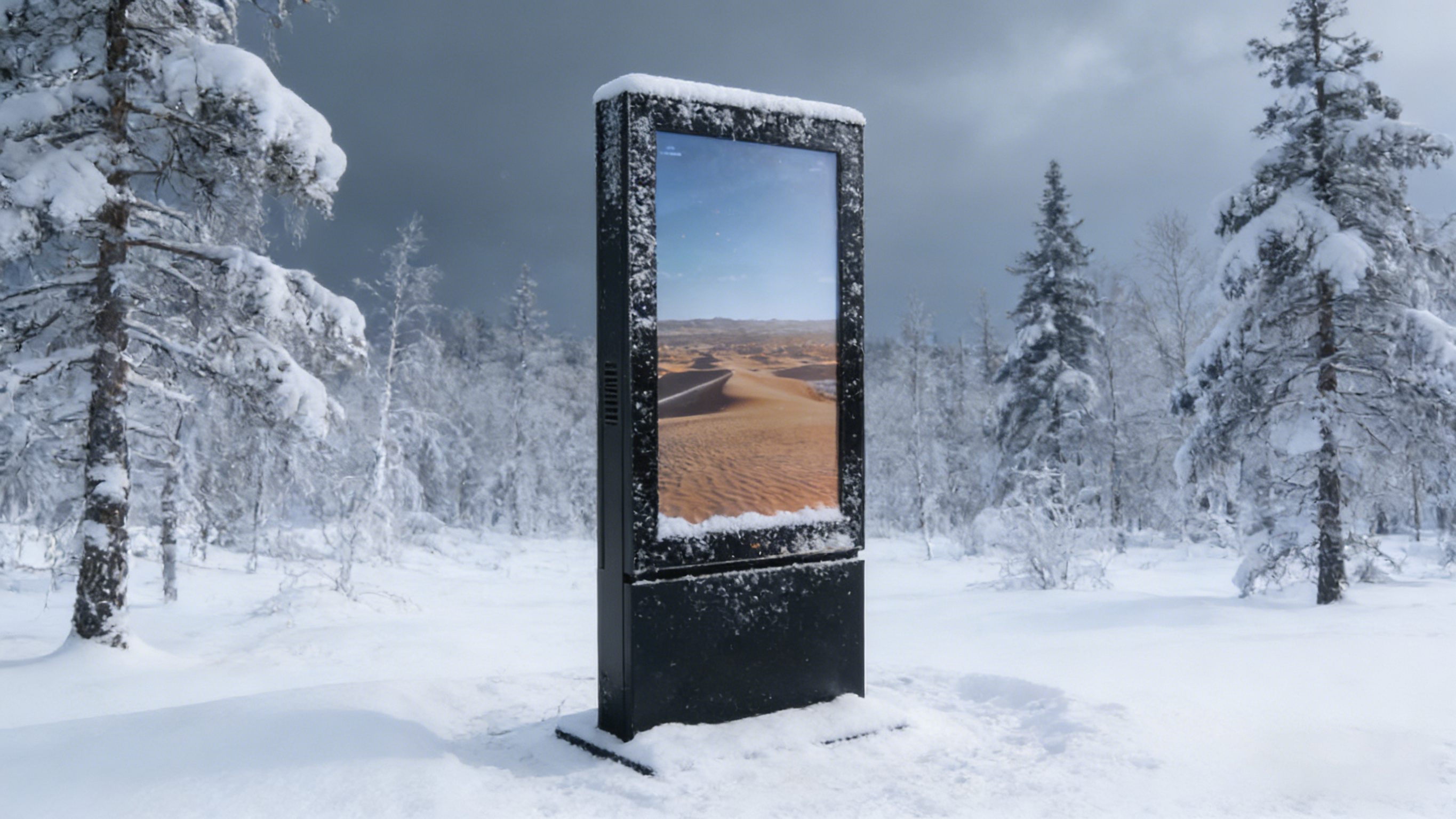
1. Extreme Temperature Ranges and Fluctuations: A device might endure scorching temperatures exceeding 50°C at the edge of the Sahara Desert or face extreme cold below -40°C during a Siberian winter. An even greater challenge is the dramatic diurnal temperature variation. In regions with strong continental climates, for example, the temperature difference within a single day can exceed 40°C, creating continuous thermal stress on components through expansion and contraction.
2. Complex Environmental Hazards: Beyond temperature, high humidity (e.g., during the rainy season in Southeast Asia), salt spray (e.g., coastal areas), and wind-blown sand and dust (e.g., deserts or industrial zones) can corrode equipment, clog cooling pathways, or cause internal condensation leading to short circuits.
3. Persistent Internal Heat Generation: The high-brightness display screen, particularly the LED backlight module, itself generates significant heat during operation. Under direct summer sunlight, the combination of external radiant heat and internal heat generation can cause the internal cabinet temperature to rise rapidly to dangerous levels.
Therefore, the core objectives of a temperature control system for outdoor advertising displays are to stabilize the internal operating temperature within the safe range for electronic components (typically 0°C to 45°C) while isolating harmful environmental factors, and to strive for a balance between high efficiency and low energy consumption. 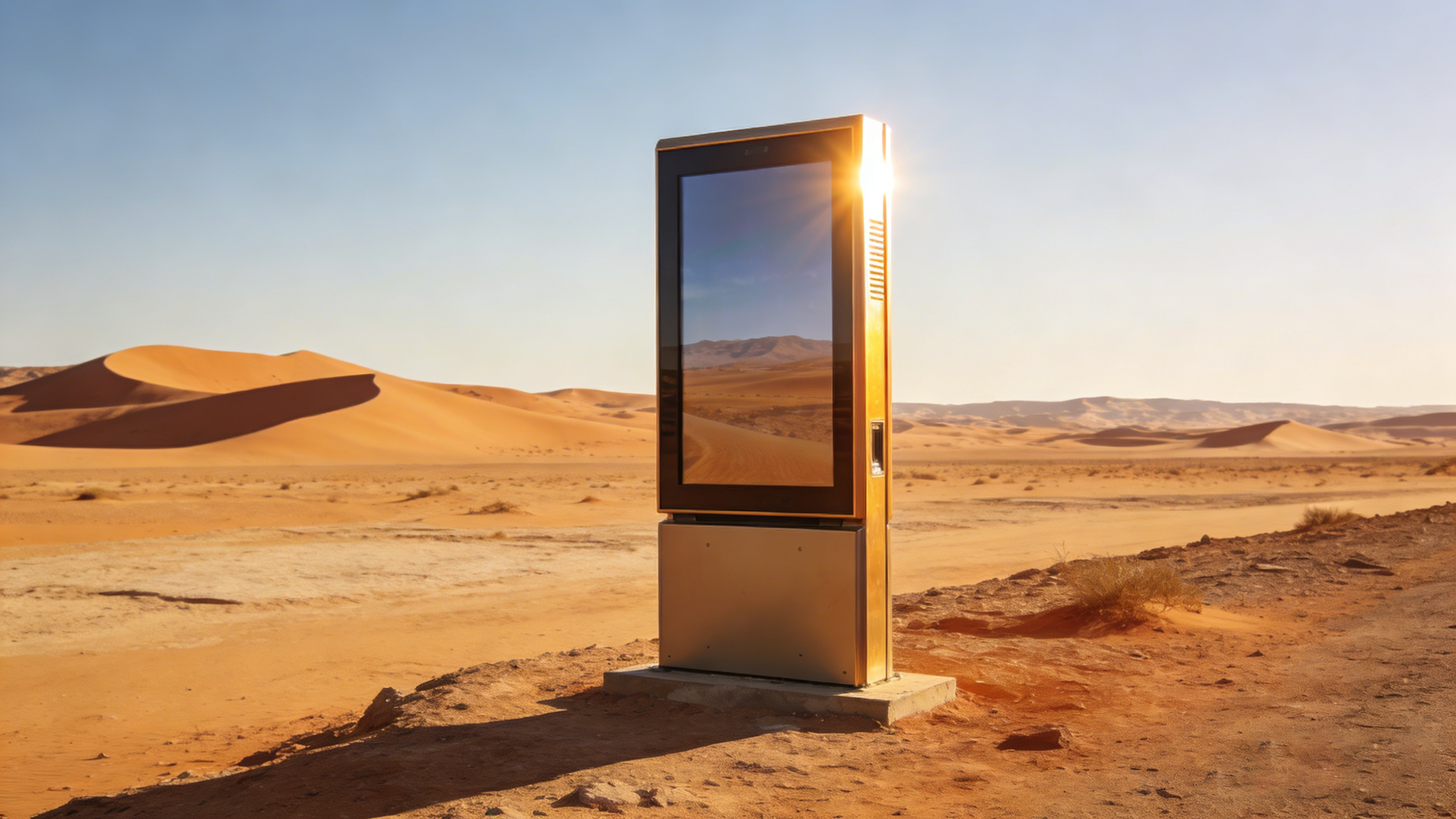
Implementation Principles and Characteristics of Mainstream Temperature Control Methods
Currently, several technical pathways exist for controlling the internal environment of outdoor advertising displays, each with its unique implementation, advantages, and disadvantages.
1. Forced Air Cooling System
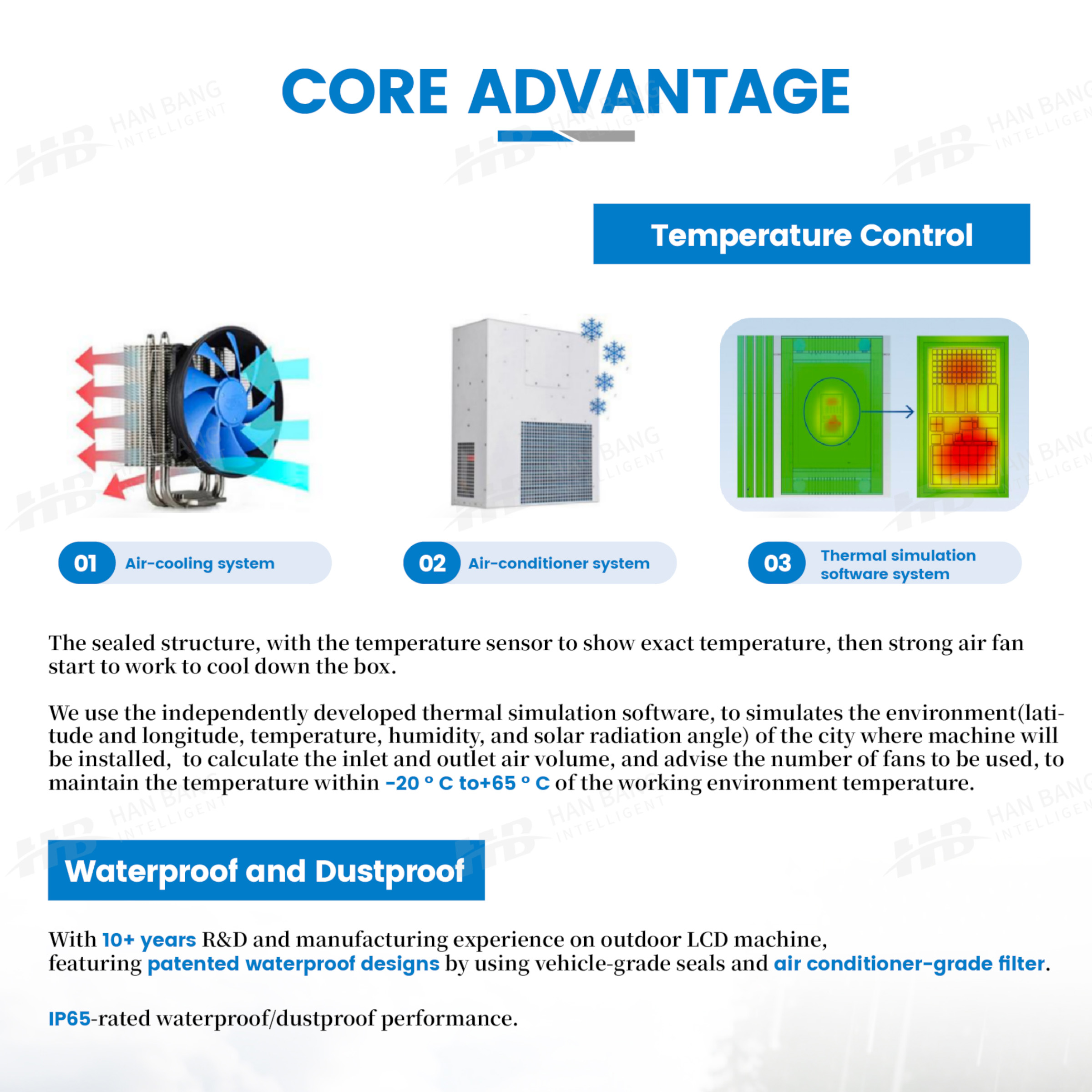
This is the most common and economical basic solution. Its principle involves designing independent air ducts inside the device, equipped with dust filters, and using fans to force air circulation, carrying heat away from components like power supplies and driver chips. In low-temperature environments, the system activates heating elements such as ceramic heating plates, and fans distribute the warm air to all corners to prevent localized cold spots.
Advantages: Relatively simple structure, low cost, and easy maintenance.
Disadvantages: Relies on external air exchange, offers limited sealing against dust and moisture, and cooling efficiency decreases in extremely hot or dusty environments.
2. Air Conditioning (Heating/Cooling Integrated) System
This is an active, precision temperature control solution. Its working principle is similar to a household air conditioner, using a compressor to circulate refrigerant coupled with indoor and outdoor heat exchangers to provide active cooling or heating. The system is typically fully sealed, with no direct air exchange between inside and outside.
Advantages: Powerful and precise temperature control, effective against extreme high and low temperatures, and excellent dehumidification and dust protection.
Disadvantages:High cost, significant energy consumption, complex structure, and requires periodic maintenance (e.g., refrigerant recharge).
3. Heat Exchanger System
This is a solution that balances sealing with heat dissipation. It uses special thermal conductive materials (such as aluminum fin stacks) to transfer heat from inside the device to the outside while physically isolating the internal and external air. Heat is conducted through solid material, but dust and moisture cannot enter.
Advantages: Achieves complete sealing, offers high protection ratings against dust and water, requires low maintenance, and provides good reliability.
Disadvantages:Heat dissipation efficiency depends on the temperature difference between inside and outside. When external temperatures are also extremely high, heat dissipation capacity becomes limited, potentially causing the internal cabinet temperature to be slightly higher than ideal.
4. Phase Change Material (PCM) Passive Temperature Control System
This is an advanced energy-saving solution. It involves filling or attaching phase change materials with specific melting points (such as paraffin-based composites) to key areas inside the device. When the ambient temperature rises above its melting point, the material absorbs heat by melting; when the temperature falls, it releases heat by solidifying. It acts like a "thermal battery," smoothing out temperature fluctuations.
Advantages:Requires zero energy consumption, has no moving parts, offers long lifespan, and is maintenance-free.
Disadvantages:Limited total heat absorption/release capacity, insufficient cooling capability under sustained extreme conditions, and is usually used as an auxiliary system.
How to Choose the Optimal Solution for Different Environments?
There is no "one-size-fits-all" formula for selecting a temperature control system. The choice must be tailored to the core climatic characteristics of the deployment location.
For Temperate Marine or Monsoon Climate Regions (e.g., Western Europe, US East Coast, parts of East Asia):
These regions have distinct seasons without prominent temperature extremes, with mild winters and potentially high humidity in summer. A high-efficiency forced air cooling system is often the most cost-effective choice. Emphasis should be placed on enhancing moisture resistance and filter design to handle rainy seasons.
For Tropical and Subtropical Hot-Humid Climate Regions (e.g., Southeast Asia, the Amazon Basin, Southern US):
High temperatures combined with high humidity and rainfall are the main challenges, with potential salt spray corrosion (coastal areas). A fully sealed air conditioning system is the preferred choice. It effectively cools and aggressively dehumidifies, maintaining the cabinet interior as a dry, constant-temperature "safe haven," completely eliminating condensation risk.
For Arid, Semi-Arid, and Desert Climate Regions (e.g., Middle East, North Africa, Australian Outback):
The challenges are persistent extreme heat, intense solar radiation, and sand/dust. Heat exchanger systems excel here. Their fully sealed nature provides absolute defense against sand and dust. In deserts with large diurnal temperature swings, heat dissipation is very efficient at night. For locations with consistently extreme daytime heat, a hybrid model like "heat exchanger + internal auxiliary low-power air conditioning" can be considered.
For Polar and Alpine Severe Cold Climate Regions (e.g., Nordic countries, Canada, Alaska):
The core conflict is extreme cold and snow. The system must guarantee cold-start capability at low temperatures. A solution employing high-power heating modules combined with high-efficiency insulation should be used. Heat exchanger systems are also suitable here, as they prevent external cold air from entering directly. The heating system requires redundant design, and the display itself must have a wide operating temperature range.
For Special Polluted Environments like Industrial Zones or Transportation Hubs:
The air may contain oil fumes, chemical particles, or heavy dust. A fully sealed air conditioning or heat exchanger system is mandatory to prevent pollutant ingress, accumulation, circuit corrosion, or impaired heat dissipation.
Future Trends: Smarter, More Integrated, and Greener
Temperature control technology for outdoor advertising displays is evolving towards greater intelligence and system integration:
1.Predictive Intelligent Temperature Control: Future systems will integrate weather forecast data, using algorithms to predict environmental changes and proactively adjust operating modes (e.g., pre-cooling/pre-heating), shifting from reactive response to active regulation, improving efficiency and protecting the device.
2.Multi-System Hybrid Integration: As a single technology struggles to address all scenarios, "hybrid power" is becoming a trend. For example, a "PCM + air cooling" combination uses PCM to smooth daily fluctuations and activates air cooling during peak temperatures, significantly reducing energy consumption.
3.Component-Level Wide-Temperature Technology and New Material Applications: With advances in electronics, more core components like displays and chips are becoming inherently tolerant of wider temperature ranges, reducing the burden on the temperature control system at the source. Meanwhile, the application of new materials like thermal graphene and higher-performance PCMs will enhance thermal management efficiency.
Conclusion
Selecting the right temperature control system for an outdoor advertising display is essentially a technical decision aimed at finding the optimal balance among initial cost, operational energy consumption, maintenance complexity, and environmental severity. Understanding the working principles and limitations of different temperature control technologies, and closely integrating this knowledge with the specific climatic and environmental challenges of the deployment site, is key to designing outdoor information terminals that are both robust and cost-effective, ensuring every screen remains clear and stable under any sky.


